

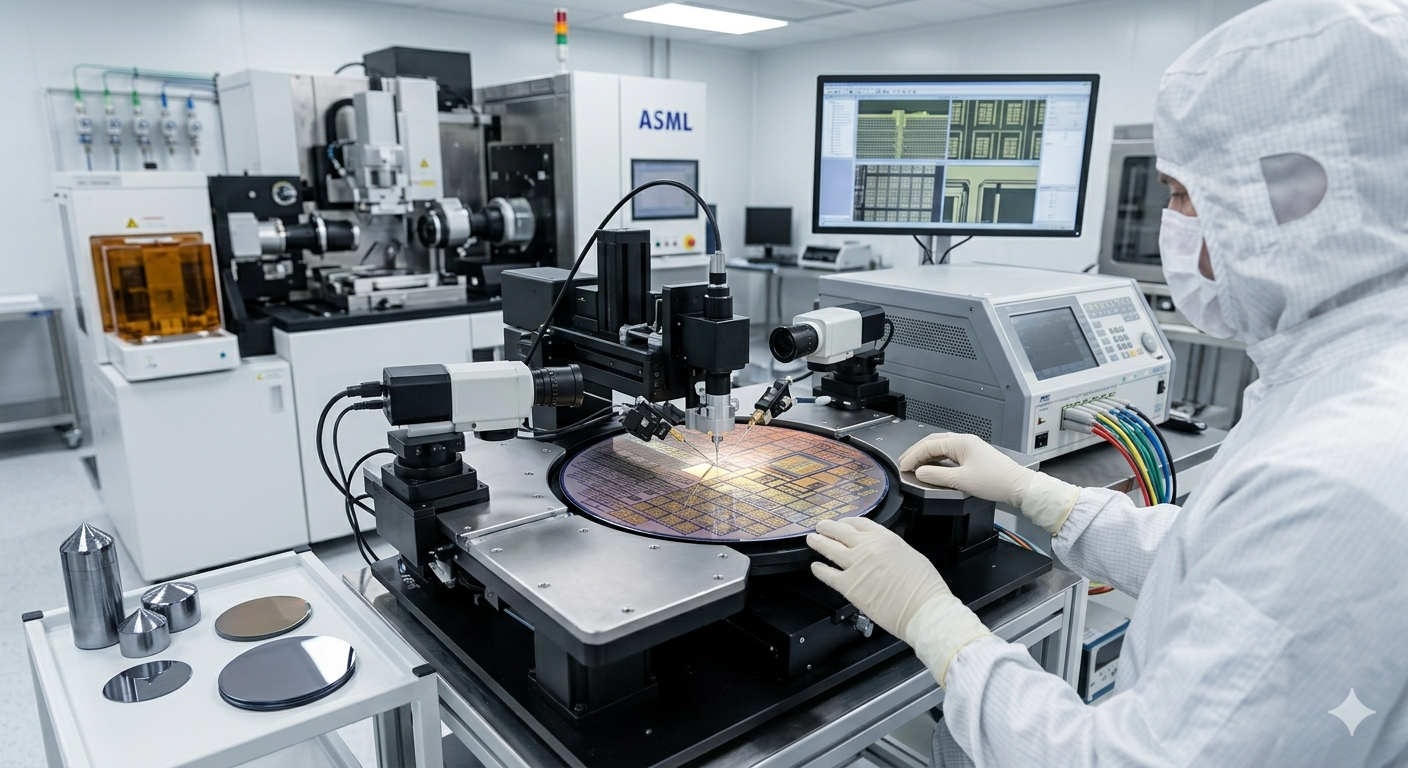
Before the rise of smartphones, artificial intelligence, and cloud computing, computing systems were far simpler and far less embedded in daily life. Today, however, almost every aspect of modern society is powered by invisible electronic components that process information at extraordinary speed. At the center of this transformation are semiconductors. They are materials that have the unique ability to control and regulate the flow of electrical current
Semiconductors are materials, usually silicon, that control electricity by switching it on and off. This simple function makes digital technology possible. When built into tiny circuits, they form microchips that act as the “brain” of modern devices. Microchips process data and control how machines work. They are used in phones, computers, cars, medical equipment, communication systems, and military technology. Without them, modern life would not function. In today’s digital age, semiconductors have emerged as one of the most valuable and strategic resources in the world. Often called microchips or simply chips, these tiny electronic components serve as the brains of modern technology. They are found in smartphones, computers, medical devices, automobiles, industrial machinery, telecommunications networks, and advanced military systems.
As economies become increasingly dependent on digital technologies, the ability to design and manufacture semiconductors has become a key source of economic strength, national security, and geopolitical influence. This growing importance has given rise to what many analysts describe as the “Chip Wars”, a global competition among nations to secure control over semiconductor technology and supply chains.
Semiconductors are now essential to global power. They drive artificial intelligence, communications, and advanced industries, making them critical for both economic growth and security. Production is concentrated in a few countries, making supply chains fragile. The COVID-19 chip shortage showed how quickly global industries can be disrupted. As a result, countries are competing to secure chip production through investment and trade restrictions.
Semiconductors are the foundation of the digital economy. Nearly every modern innovation depends on them to process, store, and transmit data. Technologies such as artificial intelligence, cloud computing, 5G networks, robotics, and autonomous vehicles all require advanced chips to function. Today, the scale of dependence is massive. Over 90% of the world’s most advanced semiconductors are produced in Taiwan, while global chip demand has increased by more than 50% in the last decade, driven by rapid digitalization and AI growth. A single smartphone can contain more than 1,000 microchips, while a modern car may use over 3,000 chips depending on its level of automation.
This dependence became especially clear during the COVID-19 pandemic. A global chip shortage disrupted nearly every major industry. Automobile production dropped by an estimated 7- 8 million vehicles in 2021 due to lack of chips. Electronics companies faced months of delays, and global supply chains experienced billions of dollars in losses. The crisis revealed how fragile modern production systems are when semiconductor supply is interrupted. Because of this, semiconductors are now treated as a strategic resource rather than just an industrial product. Governments and corporations recognize that without stable chip access, economies cannot function efficiently or compete globally.
One of the main reasons semiconductors have become a strategic resource is the concentration of production in a small number of countries. Although chip design and manufacturing involve a highly globalized network, advanced semiconductor production is dominated by a few key players. Taiwan, in particular, occupies a central position in the industry. The island is home to Taiwan Semiconductor Manufacturing Company (TSMC), the world’s leading contract chip manufacturer, producing many of the most advanced semiconductors used by major technology companies. South Korea also plays a critical role through companies such as Samsung, while the United States remains a leader in chip design, research, and semiconductor equipment.
This concentration of production has transformed semiconductors from a commercial product into a geopolitical concern. Governments increasingly view access to advanced chips as essential for maintaining economic competitiveness and military superiority. As a result, semiconductor policy has become closely linked to national security. The United States, for example, has implemented export controls aimed at limiting China’s access to advanced semiconductor technologies. These restrictions seek to slow China’s progress in areas such as artificial intelligence, supercomputing, and advanced military applications. At the same time, the United States has invested billions of dollars in domestic semiconductor production through initiatives designed to strengthen supply chain resilience and reduce dependence on foreign manufacturers.
China, meanwhile, has made semiconductor self-sufficiency a national priority. Recognizing its reliance on imported chips, Beijing has invested heavily in developing its domestic semiconductor industry. Through government funding, research programs, and industrial policies, China aims to reduce its technological dependence on foreign suppliers and establish itself as a global leader in semiconductor manufacturing. However, achieving this goal remains challenging due to the complexity of chip production and restrictions on access to advanced manufacturing equipment.
The competition over semiconductors extends far beyond the United States and China, involving major economies across Europe, East Asia, and emerging industrial regions. Governments are now investing heavily in semiconductor capacity, with the United States committing over $50 billion through the CHIPS and Science Act, the European Union targeting €43 billion in semiconductor investment, and countries like Japan and South Korea expanding domestic production to secure supply chain resilience. This global push reflects a shared understanding that technological leadership depends on reliable access to advanced chips.
As analyst Chris Miller notes, “Control over semiconductor supply chains is becoming one of the most important sources of geopolitical power in the modern world.” This shift has transformed semiconductor manufacturing into a central pillar of industrial policy, economic planning, and international cooperation, as nations race to avoid overdependence on a few key producers.
The strategic importance of semiconductors is also deeply tied to military capability. Modern defense systems rely on advanced chips for communication, surveillance, navigation, cybersecurity, and precision-guided weapons. It is estimated that a single modern fighter jet can contain over 1,000 semiconductor components, highlighting how embedded chips are in defense infrastructure. As a result, countries that dominate semiconductor technology gain a significant advantage in developing next-generation military systems.
Consequently, semiconductor supply chains are now treated as critical infrastructure. With over 90% of the world’s most advanced chips produced in Taiwan. This means that any disruption – whether geopolitical or natural could have severe global consequences. And this will in turn affect everything from financial systems to national security operations.
Ultimately, semiconductors have become the world’s most strategic resource. This is because they power the technologies that drive modern economies, strengthen national security, and shape global competitiveness. From artificial intelligence and cloud computing to advanced defense systems and critical infrastructure, chips sit at the center of nearly every modern industry. Their importance goes beyond technology, influencing trade policies, industrial strategies, and global alliances.
The growing rivalry over chip production and innovation reflects a deeper struggle for technological dominance in the twenty-first century.
Here, economic power is increasingly defined by access to advanced computing capability rather than traditional resources.
As digital transformation accelerates, control over semiconductor design, manufacturing, and supply chains will remain a decisive factor. It will shape global influence, economic resilience, and geopolitical balance in the years ahead.
Leave a Reply