

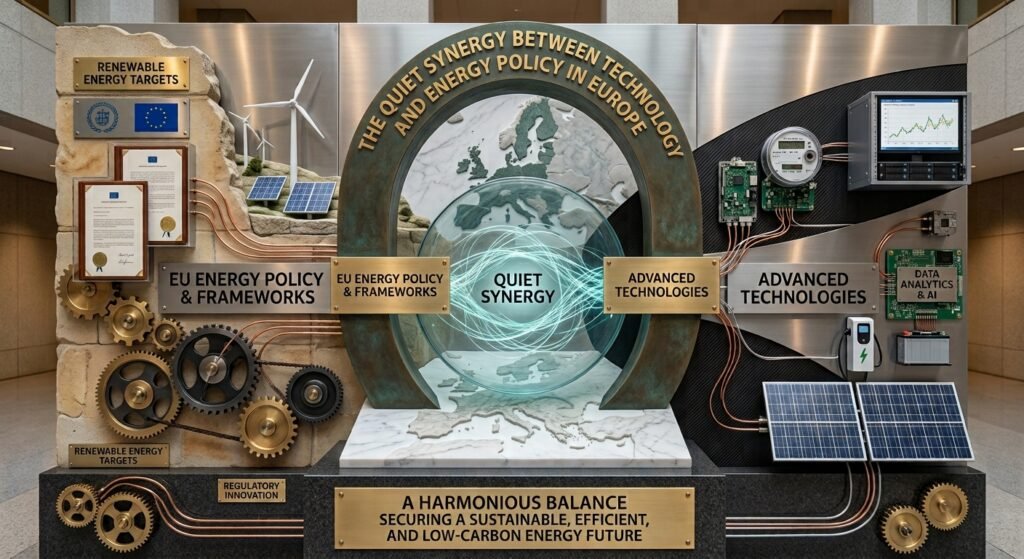
The Quiet Synergy Between Technology and Energy Policy in Europe.
When Energy Policy Meets Digital Infrastructure
Europe’s energy transition is increasingly becoming a technology question. Renewable generation has expanded but generation alone cannot deliver a flexible energy system.Electricity must be monitored, balanced, stored, distributed and consumed more intelligently which is where technology enters the policy conversation.
Across Europe, governments are moving beyond policies that simply encourage cleaner generation.Attention is shifting towards digital grids, smart meters, demand flexibility, energy storage and data-sharing systems.
The European Union’s Digitalisation of the Energy System Action Plan reflects this direction. The UK is moving along a similar path through its clean-energy and smart-systems policies.
It’s Clean Power 2030 ambition also depends heavily on modernising the infrastructure surrounding electricity.The policy objective may be cleaner energy. This technological requirement is making that energy responsive enough for a changing system.
The UK’s Grid Is Becoming a Technology Platform
Britain’s energy system was designed around predictable, centralised generation. That model is being challenged by wind, solar, electric vehicles, batteries and changing consumption patterns.
Electricity can now be produced in more locations and at different times. The grid therefore needs better visibility and greater flexibility.
The UK’s Smart Systems and Flexibility Plan addresses part of this challenge. Smart meters, automated demand response and battery storage can help electricity supply respond to demand.
Consumers can also become active participants within the system. Electric vehicles, for example, could eventually provide flexibility when appropriately integrated.
The technology does not replace policy.Instead, policy creates the conditions under which technology can deliver system-wide value.
Europe Is Building Around Interoperability
The European approach introduces another important consideration: interconnected energy markets. Energy systems increasingly cross national boundaries.
Technology therefore needs to communicate across networks, markets and regulatory frameworks. The European Commission has identified digitalisation as important for coordinating these increasingly complex systems. Data-sharing frameworks can improve visibility across energy markets. Artificial intelligence can also support forecasting and system management.
Meanwhile, smart appliances can respond to changing electricity conditions.However, digitalisation introduces its own policy questions; Who owns energy data? Who can access it? How should consumers be protected? How can cybersecurity be maintained across critical infrastructure?
These questions matter because a smarter energy system must also become a trusted energy system.
Technology Is Changing What “Efficiency” Means
Energy efficiency was traditionally associated with consuming less energy. Digital technology is expanding that definition. Efficiency can now involve using energy at the right time, in the right place and under the right conditions. That distinction becomes important as renewable generation increases.
Electricity produced by wind and solar can fluctuate. Flexible technologies can help match consumption with available supply.
This relationship is reflected in European discussions around demand-side flexibility and smart energy systems. The UK faces the same challenge. Its electricity transition will require flexibility alongside additional generation and network investment.
Technology therefore becomes part of the policy mechanism. A battery does not merely store electricity and a smart charging system does not merely charge a vehicle. When properly integrated, both can support wider system balancing.
The Policy Challenge Is Becoming More Human
Technology can make an energy system smarter. It cannot automatically make it fairer that responsibility remains with policymakers. Consumers must understand how flexibility programmes affect them.Businesses need predictable rules before investing in new technologies. Energy companies require standards that encourage innovation without weakening security.
Governments must therefore design policies around both infrastructure and behaviour. The strongest European models will probably combine technological ambition with clear consumer protections.
The UK’s experience will be particularly interesting here. It’s transition towards clean power requires significant technological coordination. It also requires households, businesses and infrastructure operators to participate in the transition.
The emerging relationship between technology and energy policy is therefore bigger than digitalisation. It is about redesigning how an energy system thinks, responds and operates.
Leave a Reply