

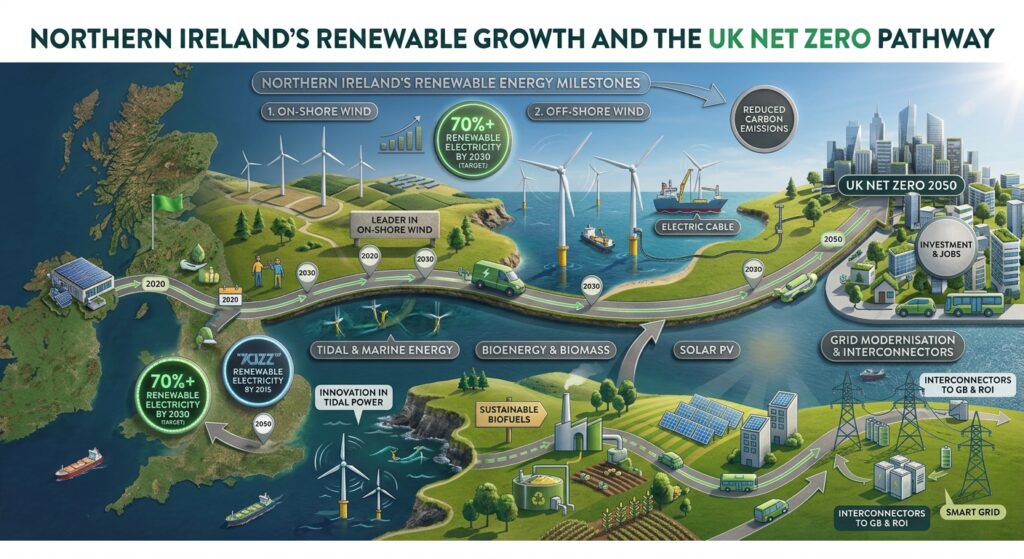
Northern Ireland’s Renewable Growth and the UK Net Zero Pathway.
Northern Ireland’s Renewable Energy
Landscape Northern Ireland has become an important contributor to the United Kingdom’s transition towards clean energy. As the UK works towards its legally binding target of achieving net zero greenhouse gas emissions by 2050, every nation has a role to play in reducing carbon emissions and increasing the use of renewable energy. Although Northern Ireland has a smaller population than the other UK nations, it has made significant progress, particularly in renewable electricity generated from wind power. According to the UK Climate Change Committee, decarbonising electricity remains one of the most effective ways to meet national climate goals while strengthening energy security. Northern Ireland’s continued investment in renewable energy reflects both regional priorities and wider UK policies aimed at creating a sustainable energy future.
A Unique Electricity System
Northern Ireland’s energy system differs from that of England, Scotland and Wales because it operates within the Single Electricity Market (SEM), which it shares with the Republic of Ireland. This integrated market allows electricity to be traded across the island, improving efficiency and ensuring a more reliable electricity supply.
The shared electricity network requires close cooperation between governments, regulators and system operators. While this arrangement improves energy security, it also means that decisions regarding electricity infrastructure and renewable integration often involve cross-border coordination. Despite these complexities, the system has enabled Northern Ireland to make significant progress in expanding renewable electricity generation.
Wind Energy as the Foundation of Renewable Growth
Wind power has become the largest source of renewable electricity in Northern Ireland. Strong and consistent wind conditions across the region make it well suited for onshore wind farms, which now generate a significant proportion of the country’s electricity.
The growth of wind energy has reduced dependence on imported fossil fuels, lowered greenhouse gas emissions and strengthened energy security. It has also created employment opportunities in construction, engineering, maintenance and environmental management. In many rural communities, renewable energy projects have stimulated local economic development through investment and infrastructure improvements.
As electricity demand increases through the adoption of electric vehicles and low-carbon heating systems, wind energy will remain central to Northern Ireland’s contribution to the UK’s clean energy transition.
Grid Infrastructure and Cross-Border Challenges
Despite the success of renewable energy development, Northern Ireland faces several infrastructure challenges. The electricity grid was originally designed for conventional power generation and now requires significant upgrades to accommodate larger volumes of renewable electricity.
Some renewable projects experience delays because transmission networks have reached their capacity limits. Furthermore, because Northern Ireland shares its electricity market with the Republic of Ireland, maintaining grid stability requires constant coordination between both jurisdictions. Since wind energy production varies according to weather conditions, electricity operators must carefully balance supply and demand to maintain system reliability.
Addressing these challenges will require investment in smarter electricity networks, battery storage technologies and improved transmission infrastructure.
Supporting the UK’s Net Zero Commitments
Northern Ireland plays an important role in helping the UK achieve its legally binding net zero target by 2050. Reducing emissions from electricity generation supports wider decarbonisation efforts across transport, industry and residential heating, as these sectors increasingly rely on electricity rather than fossil fuels.
Northern Ireland has also introduced its own climate legislation that complements UK-wide environmental objectives. These shared commitments demonstrate how regional action contributes to national climate ambitions while supporting international efforts under the Paris Agreement to reduce greenhouse gas emissions.
Policy Support and Future Investment
Government policy continues to drive renewable energy growth across Northern Ireland. The region’s Energy Strategy: The Path to Net Zero Energy outlines long-term plans to increase renewable electricity generation, improve energy efficiency and modernise electricity infrastructure.
Alongside regional initiatives, UK Government policies encourage investment in renewable energy through market reforms, funding programmes and innovation in clean technologies. Future investment is expected to focus not only on expanding wind generation but also on developing battery storage, smart grids, green hydrogen production and offshore renewable energy.
These technologies will improve the flexibility of the electricity system while supporting long-term economic growth and environmental sustainability. Continued collaboration between government, industry and energy providers will be essential to achieving these objectives.
The Way Forward
Northern Ireland occupies a distinctive position within the UK’s renewable energy landscape. Its shared electricity market with the Republic of Ireland presents unique operational challenges, yet it also creates opportunities for greater cooperation and innovation. Wind energy has already established itself as the backbone of the region’s renewable electricity supply, demonstrating the significant contribution Northern Ireland can make to the UK’s climate ambitions.
Looking ahead, continued investment in modern electricity infrastructure, supportive government policies and emerging technologies will strengthen Northern Ireland’s role in achieving net zero emissions. By overcoming existing grid challenges and maintaining its commitment to renewable development, Northern Ireland will continue to play a pivotal role in building a cleaner, more resilient and sustainable energy future for both the region and the wider United Kingdom.
Leave a Reply