

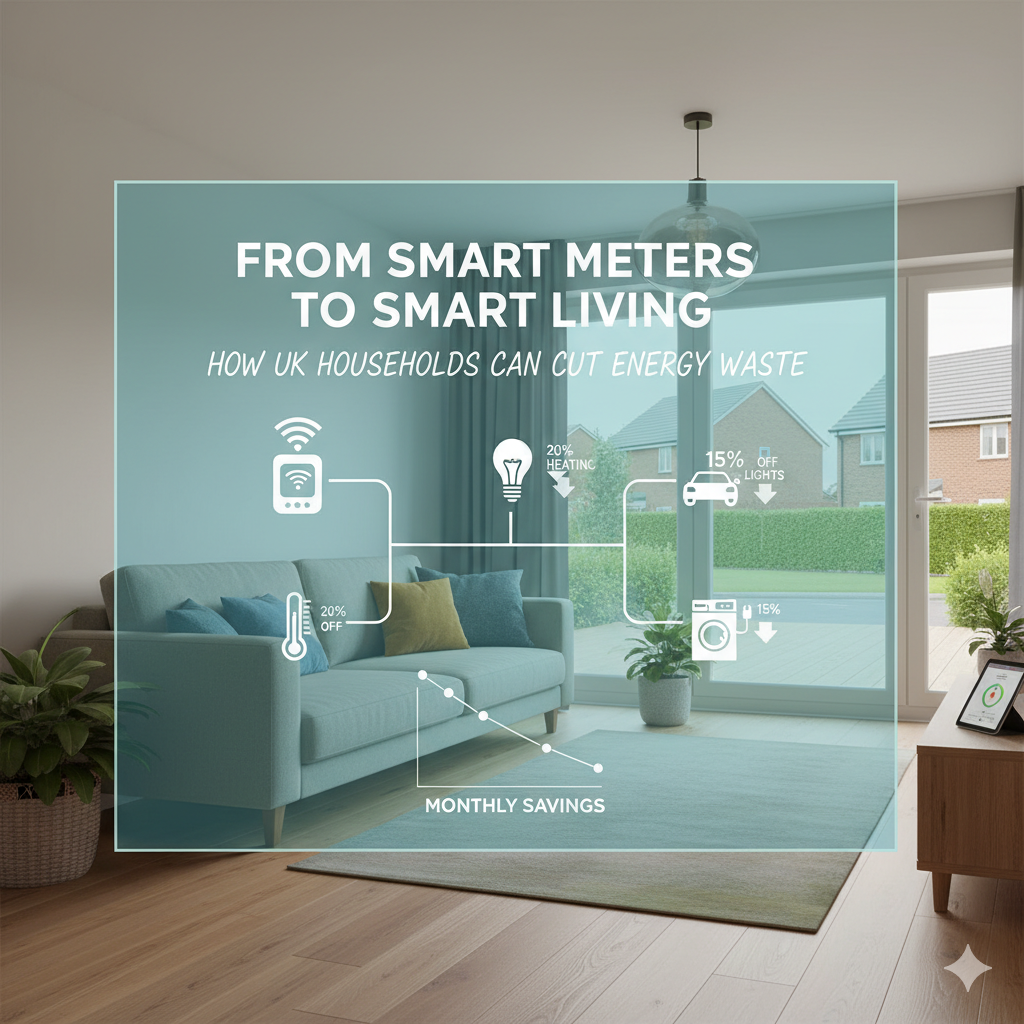
From Smart Meters to Smart Living: How UK Households Can Cut Energy Waste.
Powering a Smarter Future: Why Smart Meters Matter Now
With more than 30 million smart meters installed across the UK, households are entering a new era of energy awareness. As bills fluctuate and the government advances its net-zero commitments, the need for clear, accurate information about energy use has never been greater. Smart meters provide that clarity by giving consumers immediate insight into when, where, and how energy is being used. This transparency helps families reduce unnecessary waste and supports national efforts to build a more resilient, efficient energy system.
Seeing Your Energy Differently: Real-Time Insights That Drive Change
Smart meters deliver real-time consumption data, replacing the limited and delayed readings of traditional meters. Instead of waiting for quarterly bills or estimated usage, households can view live energy patterns throughout the day. This level of detail makes it easier to notice waste, whether it’s heating running longer than needed, appliances left on standby, or energy-intensive routines during peak hours.
These insights encourage thoughtful behaviour. Research supported by Ofgem and the Department for Energy Security and Net Zero shows that when people monitor their consumption regularly, they naturally adopt habits that lower energy use without compromising comfort. Over time, these small actions accumulate, reducing both household emissions and energy costs. By simply understanding their usage, UK households gain more control over their daily energy decisions.
From Data to Action: Apps, Tools and the Growth of Smart Living
The technology surrounding smart meters has expanded quickly. Most energy suppliers now offer apps that synchronise with smart meters, enabling users to track daily and weekly consumption, set spending limits and receive personalised efficiency recommendations. These tools help families compare seasonal usage and recognise unusual spikes that may signal inefficient appliances or heat loss.
Home-energy management devices also enhance this shift toward smarter living. Smart thermostats can learn preferred heating patterns, connected plugs can turn unused devices off automatically, and virtual assistants can show energy summaries on command. These tools turn raw data into practical, everyday actions. As more households adopt them, smart meters evolve from simple monitoring devices into the backbone of a more responsive and efficient home environment.
This trend reflects the UK’s broader strategy to modernise homes through digital innovation and energy-saving technologies. As infrastructure develops, the role of smart meters will continue to expand.
Efficiency Meets Policy: The UK’s Push Toward Lower Emissions
Smart meters support many of the UK’s major energy-efficiency initiatives. The country’s legally binding target to reach net-zero emissions by 2050 depends heavily on consumer participation. Government programmes such as the Great British Insulation Scheme, the Boiler Upgrade Scheme, and the Smart Metering Implementation Programme encourage households to adopt technologies that cut waste and support renewable energy integration.
Smart meters complement these initiatives by making efficiency improvements measurable. For example, after installing better insulation or switching to a heat pump, households can see the direct impact on their energy use. This clarity helps families make informed decisions about future upgrades and supports national efforts to reduce demand on the grid.
There is also increasing interest in demand-side flexibility, a system that rewards consumers for using energy during off-peak or high-renewable periods. Smart meters enable households to participate in such programmes, helping balance national demand while lowering costs. As wind and solar generation continue to grow, this flexibility becomes even more important.
Regulators such as Ofgem continue to develop standards that ensure smart meters remain secure, accurate, and beneficial for consumers. These policies help build trust and encourage widespread adoption, strengthening the overall energy landscape.
Smarter Homes, Smaller Bills: Turning Technology Into Savings
When used proactively, smart meters can lead directly to savings. They help households identify where energy is slipping through the cracks whether through outdated appliances, excessive heating, or inefficient daily habits. Combined with modern upgrades such as LED lighting, smart thermostats, and improved insulation, smart meters can contribute to noticeable reductions in monthly bills.
Smart meters also allow easier access to innovative tariffs, including time-of-use plans that offer lower prices during off-peak periods. As more renewable energy enters the grid, these tariffs become increasingly cost-effective and environmentally friendly. Beyond savings, smart meters eliminate estimated billing, offering accurate statements that reflect real consumption and reducing disputes with suppliers.
Living Smarter, Living Greener: A New Era for UK Households
Smart meters are more than a technological upgrade they represent a shift in how UK households understand and manage energy. They offer clarity at a time of rising costs, support national climate goals and lay the foundation for more advanced home-energy systems. As consumers embrace apps, automation tools, and more efficient habits, smart living becomes not just possible but practical.
With clear data, supportive policies and accessible technology, UK households are increasingly equipped to cut waste, lower bills and contribute to a more sustainable energy future.
Leave a Reply