

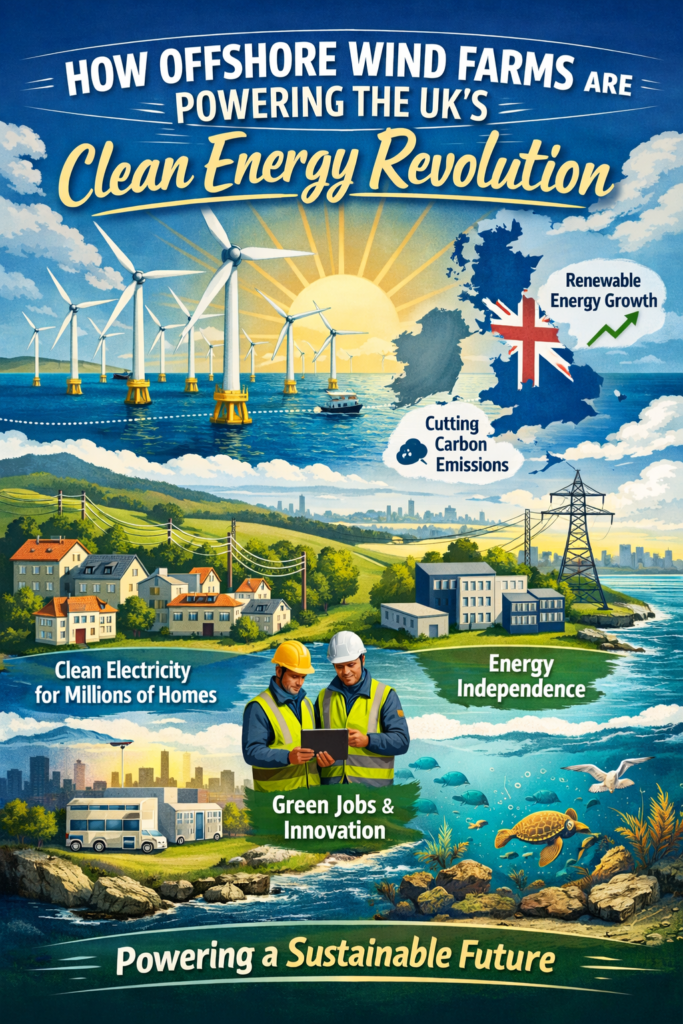
How Offshore Wind Farms Are Powering the UK’s Clean Energy Revolution.
The Rise of Offshore Wind in the United Kingdom
Over the past two decades, offshore wind has become a defining feature of the United Kingdom’s transition to cleaner energy. With long coastlines and strong wind resources across the North Sea, the country has been able to harness offshore wind more effectively than many others.
Today, the UK ranks among the global leaders in offshore wind capacity and has developed one of the largest operational fleets of offshore wind turbines in the world.
This growth reflects the UK’s broader commitment to reducing carbon emissions and achieving net-zero targets. Offshore wind farms already generate a significant portion of Britain’s electricity supply, powering millions of homes and businesses. The steady expansion of these projects has transformed offshore wind from an experimental technology into a reliable component of the national energy mix.
Technological improvements have also contributed to this progress. Modern turbines are larger, more efficient, and capable of producing significantly more electricity than earlier models. Combined with falling production costs, offshore wind energy has become increasingly competitive with traditional energy sources such as coal and natural gas.
Policy Frameworks Supporting Offshore Wind Expansion
A key factor behind the success of offshore wind in the UK is the country’s supportive policy framework. Government initiatives have played a central role in attracting private investment and encouraging large-scale development across British waters. One of the most influential policy tools is the Contracts for Difference (CfD) scheme.
The CfD programme guarantees renewable energy producers a fixed price for the electricity they generate. If market prices fall below the agreed price, the government covers the difference, ensuring financial stability for developers. This mechanism reduces investment risks and has encouraged energy companies to commit billions of pounds to offshore wind projects.
The scheme has also stimulated competition between developers, gradually lowering the cost of offshore wind electricity. As successive auction rounds have taken place, the price of offshore wind energy has declined significantly, making it one of the most cost-effective renewable technologies available.
Beyond the CfD scheme, the UK government has introduced broader strategies aimed at strengthening domestic energy security. Policies such as the British Energy Security Strategy emphasise expanding renewable capacity to reduce dependence on imported fossil fuels. Planning reforms, seabed leasing programmes, and partnerships with private investors have further accelerated offshore wind development.
Economic Growth and Job CreationOffshore wind development has delivered important economic benefits across the United Kingdom. Large wind projects require extensive supply chains that involve manufacturers, engineers, technicians, and logistics providers. As a result, the industry has become a major source of employment and industrial investment.
Many coastal communities have experienced renewed economic activity as ports and shipyards adapt to support turbine construction and maintenance. Ports that were previously associated with declining industrial activity are now being repurposed as assembly hubs for turbine components, installation vessels, and maintenance operations.
Industry estimates suggest that the offshore wind sector could support tens of thousands of jobs by the end of the decade. These opportunities extend beyond engineering roles to include research, project management, environmental assessment, and advanced manufacturing.
In addition to employment, offshore wind projects attract substantial private investment. Billions of pounds have already been committed to the development of new wind farms, strengthening the UK’s position as a global centre for renewable energy innovation.
Environmental Considerations and Marine Protection
Despite its environmental advantages, offshore wind development must also address concerns related to marine ecosystems and biodiversity. Wind farms are typically located in sensitive marine environments that support fisheries, seabirds, and other wildlife. For this reason, developers must conduct extensive environmental assessments before construction begins.
These assessments examine potential impacts on bird migration routes, marine mammals, and seabed habitats. Monitoring programmes continue even after wind farms become operational, ensuring that any environmental risks are carefully managed.
Some studies suggest that turbine foundations can create artificial reef environments, which may support marine life by providing new habitats. However, environmental organisations and regulators emphasise the importance of careful planning to prevent unintended ecological disruptions.
Balancing renewable energy expansion with environmental protection remains an essential part of the UK’s offshore wind strategy.
Expanding Offshore Wind Capacity Towards 2030
Looking ahead, the United Kingdom has set ambitious targets for offshore wind expansion. The government aims to reach 50 gigawatts (GW) of offshore wind capacity by 2030, including several gigawatts generated by floating wind turbines designed for deeper waters.
Floating wind technology represents an important next step for the industry. Unlike traditional turbines fixed to the seabed, floating turbines can operate in deeper areas where wind speeds are often stronger and more consistent. This innovation could significantly increase the UK’s renewable energy potential.
Achieving the 2030 target will require continued investment, improved supply chains, and expanded electricity grid infrastructure capable of transporting renewable power to homes and businesses. While challenges such as rising construction costs and planning delays remain, the long-term outlook for offshore wind in the UK remains highly positive.
As the country continues it’s transition toward a low-carbon economy, offshore wind farms are expected to remain one of the most visible and influential symbols of Britain’s clean energy revolution.
Leave a Reply